George B. Berry Chair Professor of Engineering
Professor, Mechanical and Aerospace Engineering


Projects
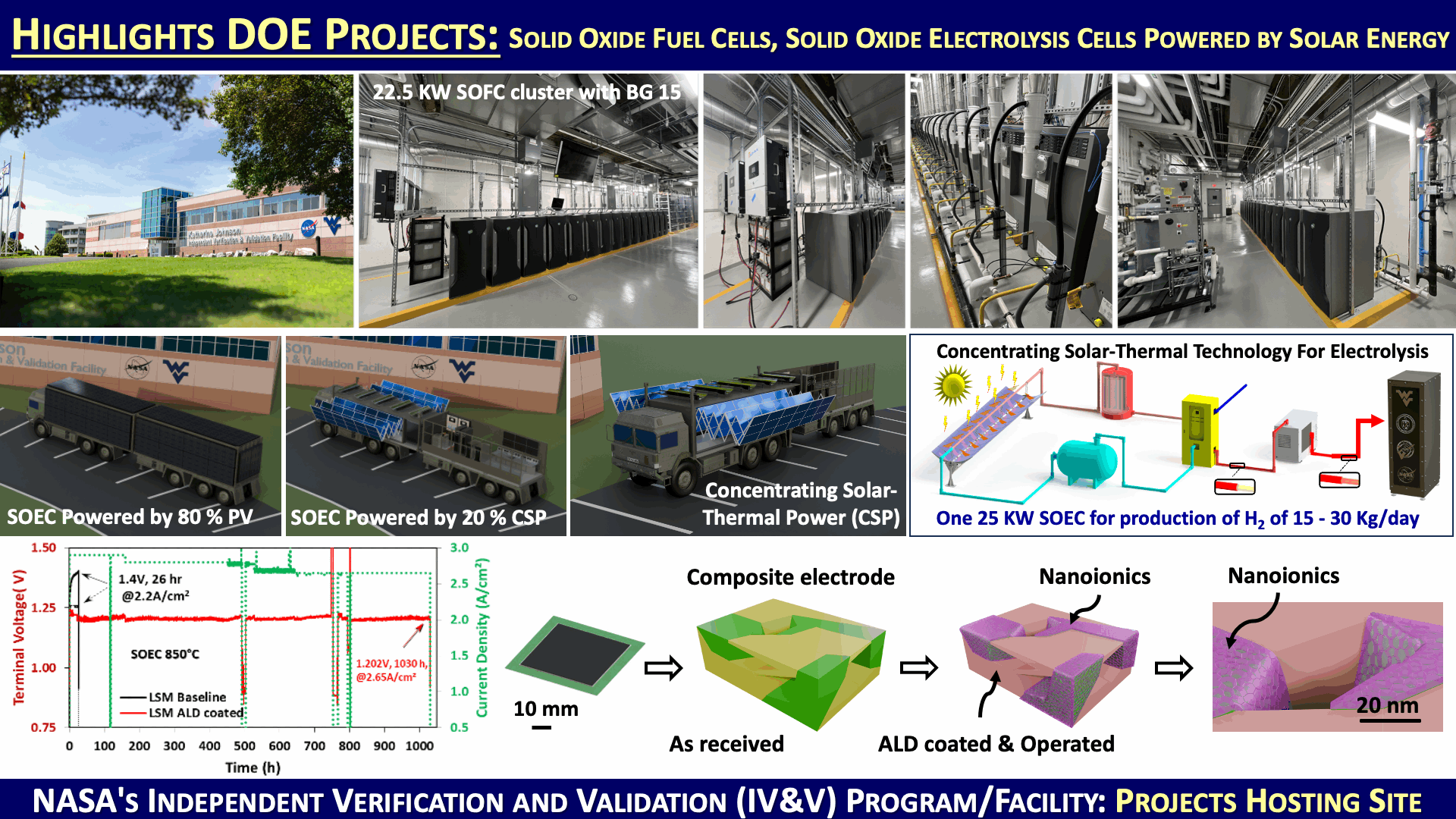
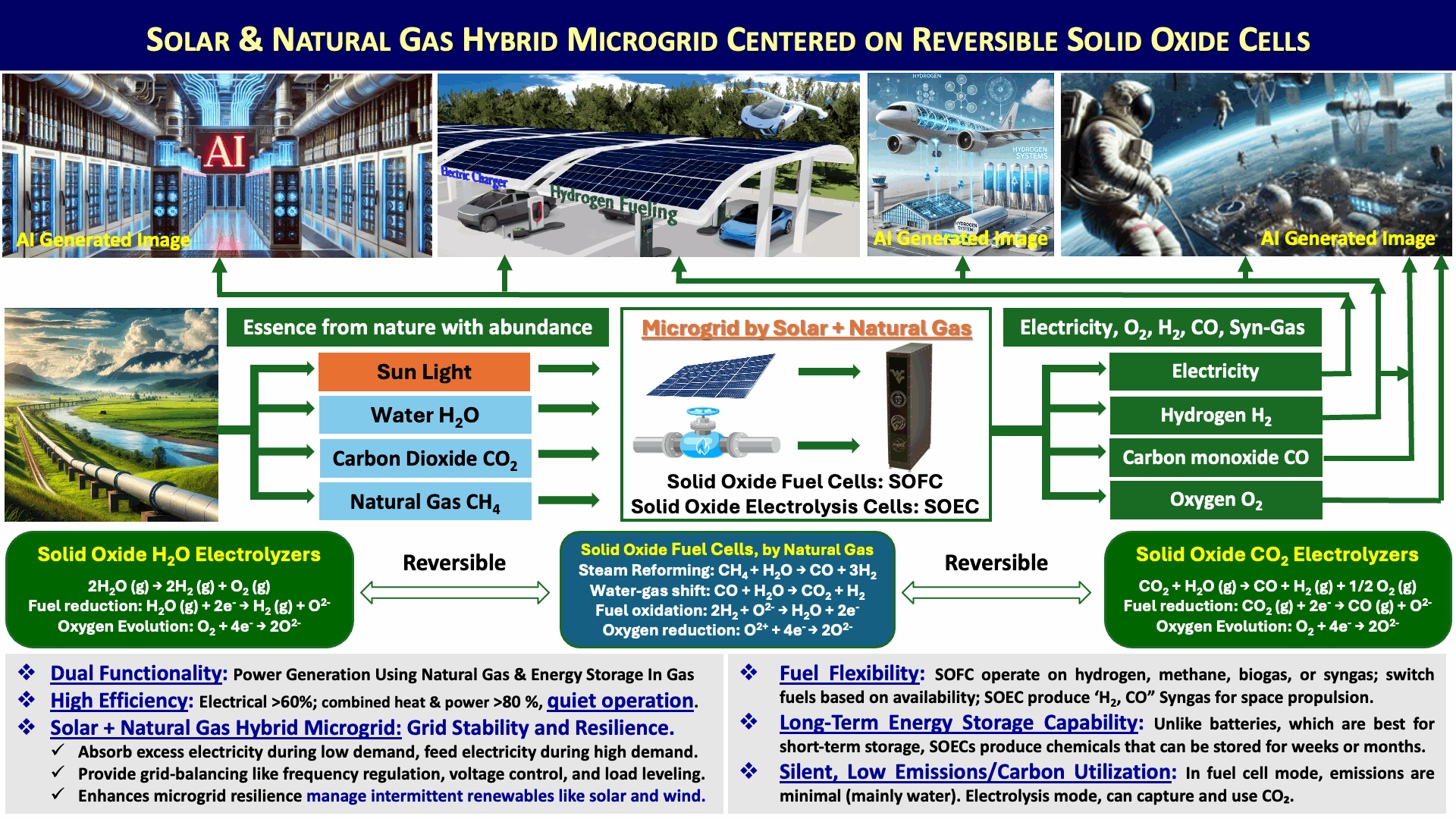
The US DOE Solar Energy Technologies Office[i] awarded a $5 million project for designing, building, and validating the first-of-a-kind energy conversion system, which integrates solar energy with natural gas to produce Hydrogen and Oxygen gases using Solar-Thermal Energy, as well as electricity generation. The project will launch America's first-of-a-kind solar and natural gas hybrid microgrid for On-Demand Solar Fuel Production and electricity generation, powering artificial intelligence (AI) computers and AI data centers.
In collaboration with the National Aeronautics and Space Administration's (NASA's) Independent Verification & Validation (IV&V) Program, at the Katherine Johnson Independent Verification and Validation (IV&V) Facility[ii], this project will be executed by a research team led by Dr. Xueyan Song,[iii] George B. Berry Chair of Engineering and Professor in the Mechanical, Materials and Aerospace Engineering department,[iv] Statler College of Engineering and Mineral Resources[v] and Chair of the Research Committee of the Faculty Senate,[vi] of West Virginia University,[vii] alongside their outstanding industry collaborators and world-leading manufacturers including SolydEra,[viii] Sol-Ark,[ix] Total Energy Solutions[x] and Honda.[xi]
Solar energy and solar technology play a pivotal role in humankind's space exploration, providing a reliable power source that enables long-duration missions, reduces dependence on finite fuels, and supports innovative propulsion systems.
Meanwhile, sunlight and water are essential for biological processes, enabling life on Earth. Yet, largely unknown to the public, the heat and thermal energy from sunlight can potentially be used to split water molecules through electrochemical electrolysis, which requires a large amount of thermal energy to enable endothermic electrochemical reactions, especially when using solid oxide electrolysis cells operating at temperatures of ~750°C. Direct integration of solar thermal energy, instead of electricity, supplies hot steam for electrolysis production of hydrogen and pure Oxygen.
Through this project, the electrolyzer will be integrated with solar concentrators and solar energy storage systems, which feed a hot steam to the electrolyzer to electrochemically and silently split H2O and produce Oxygen and Hydrogen, potentially for astronauts' life support and methane-based propellant on Moon and Mars.
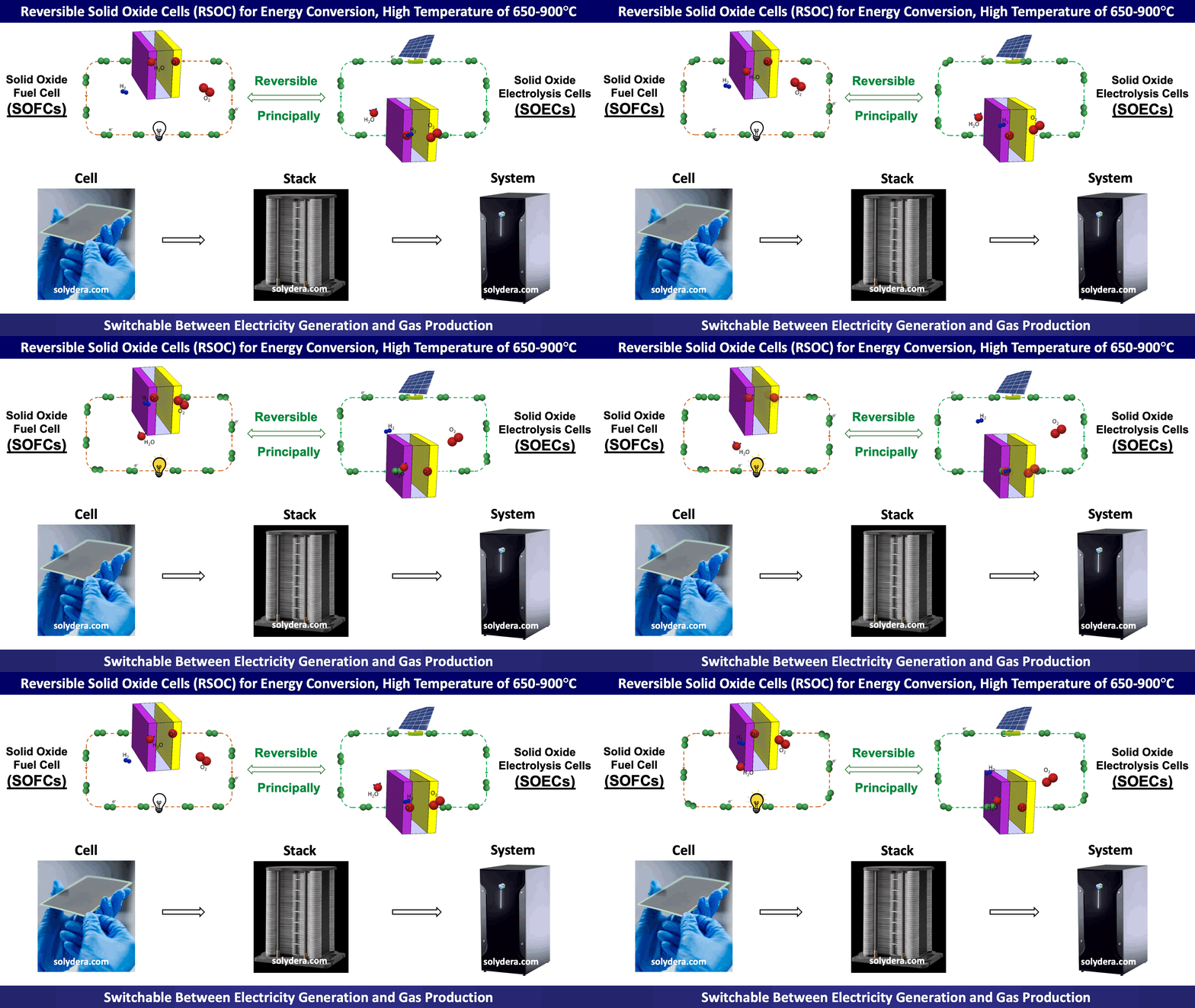
This DOE project is built upon the team's success in energy conversion using natural gas and over a decade of fundamental research in solid oxide cells and stacks. The advanced electrolyzer developed through this newly awarded DOE project will double the hydrogen production rate of the state-of-the-art electrolyzers due to the high energy conversion properties of its cells and stacks, which are coated using atomic layer deposition technology developed by the research team led by Dr. Song at West Virginia University. The designed 30 KW electrolyzer, powered by 100% solar energy, will produce ~15-30 kilograms of hydrogen per day. Thirty kilograms of hydrogen could power a fuel cell vehicle, such as Honda's 2025 CR-V e:FCEV,[xii] for driving a distance of ~1800 miles. The electrolyzer developed through this project is also elegant in its versatility. It could operate silently and reversibly as a fuel cell that utilizes natural gas to generate electricity.
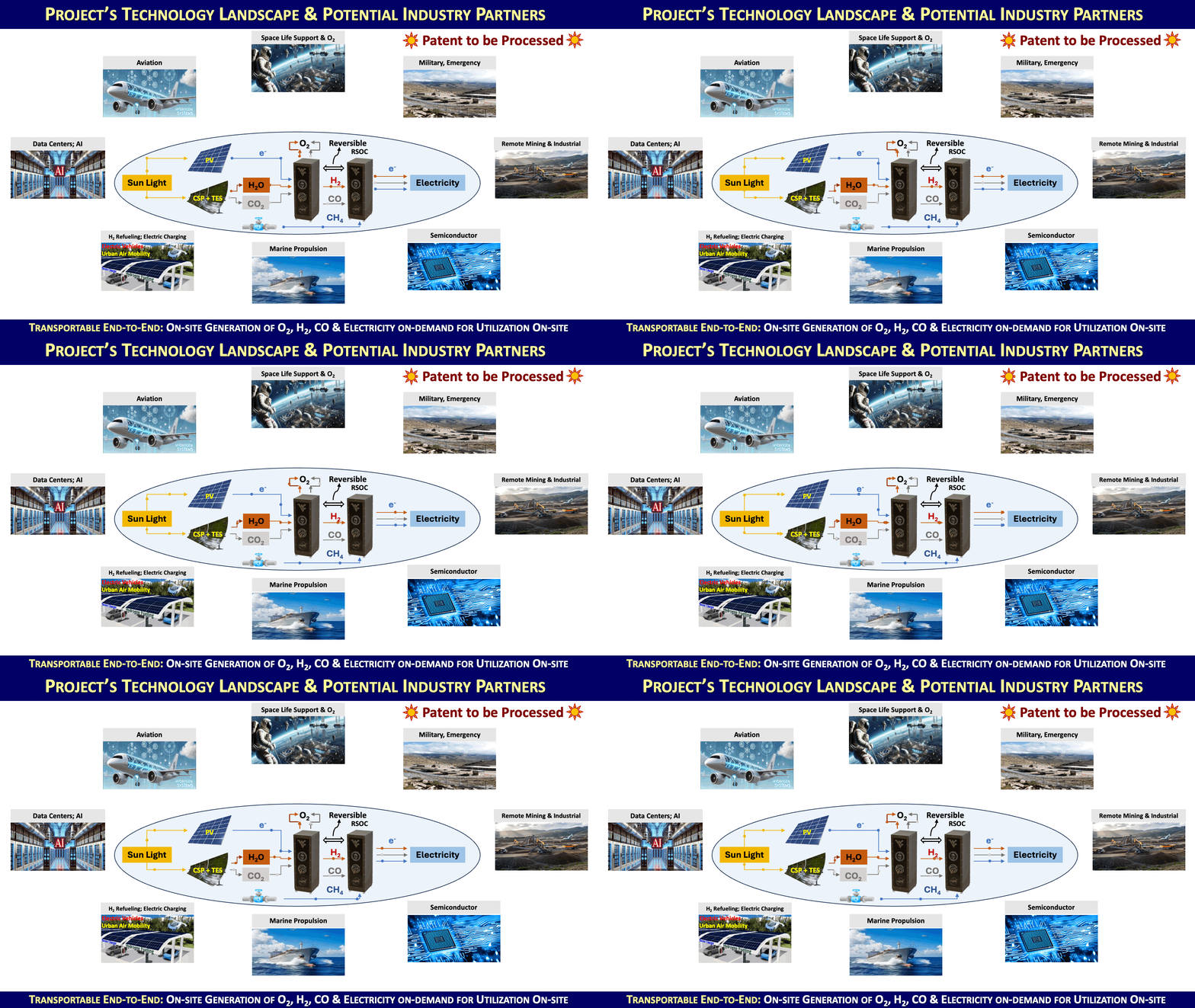
The reversible electrolyzer integrated with solar energy systems from this DOE project will be the first reversible, high-temperature electrolysis system to meet industry application standards in the USA. Most importantly, the designed Solar-Natural gas energy conversion system and the resultant microgrid are comprehensive in their modularity, ensuring readiness for large-scale manufacturing, for on-site power generation, for AI computation and AI data centers to address surging electricity demands and grid constraints. The independent technology verification and validation of the developed energy conversion system for AI computation and AI data centers will be conducted by the NASA IV&V program.
The project team will also launch the "AI Energy & Space Scholarship," a project-organized competition and recognition for high school students.
[i] https://www.energy.gov/eere/solar/solar-energy-technologies-office
[ii] https://www.nasa.gov/about-nasas-ivv-program/
[iii] https://directory.statler.wvu.edu/faculty-staff-directory/xueyan-song
[iv] https://mmae.statler.wvu.edu/
[v] https://www.statler.wvu.edu/
[vi] https://facultysenate.wvu.edu/
[vii] https://www.wvu.edu/
[viii] https://www.solydera.com/en/
By NASA's James Webb Space Telescope

By NASA's James Webb Space Telescope
Partners
Funded by DOE, Solar Energy Technologies Office
Technology Independent Verification & Validation (IV&V) at NASA IV&V
Project Led by West Virginia University
In collaboration with SolydEra, Sol-Ark, Total Hydrogen Solutions, and Honda


